Types of Powder Handling Problems and Effective Solutions
Bridging
This phenomenon, known as bridging, occurs when stored material adheres to the hopper walls or becomes compacted under its own weight and stubbornly forms a stable arch that blocks the outlet and prevents material above from flowing out.

Bridging-Prone Materials and Precautions
Bridging is more likely to occur when the hopper outlet is relatively small. Care should be taken when dealing with this type of blockage, as applying vibration may inadvertently impact the material further, making the blockage stronger and more difficult to clear.
Special attention is required when handling high-moisture sand, coarse aggregates (including ores), hygroscopic materials such as iron oxide, flour, and lime, as well as deliquescent materials such as salt, urea, and ammonium sulfate. These materials tend to cake and consolidate under high-humidity conditions or condensation, which can lead to bridging conditions.
Equipment Suitable for Eliminating Bridging
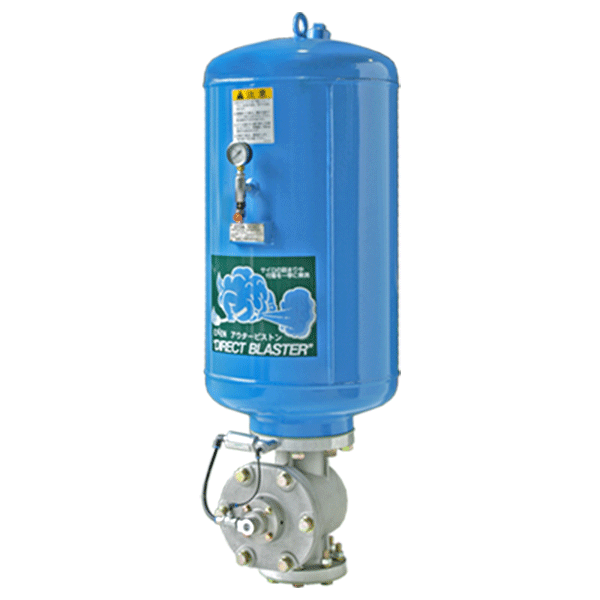
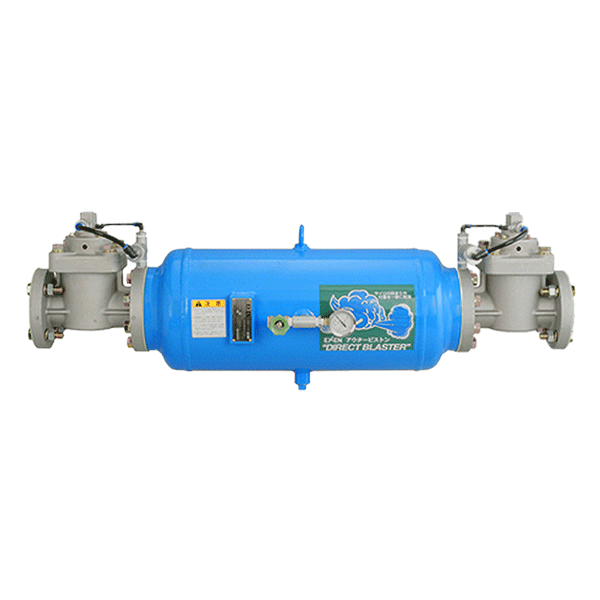
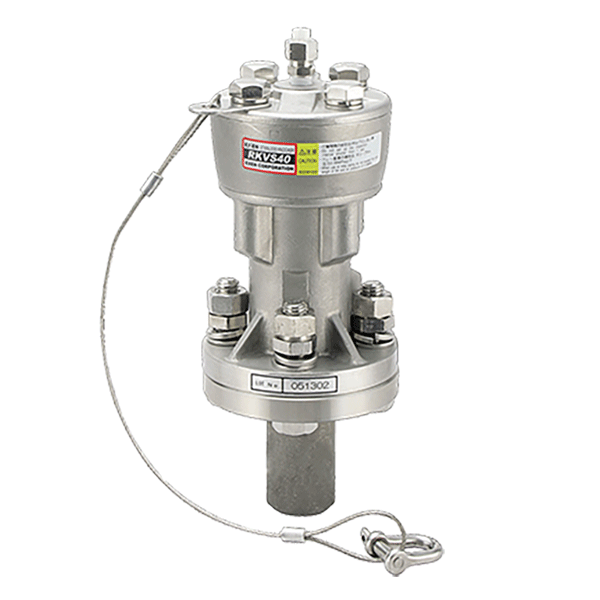
Blasters, including Direct Blaster and Mini Blaster, as well as fluidizer, are commonly used to eliminate bridging.Vibration devices, such as vibrators and knockers, may not be suitable as a solution in all cases, depending on the characteristics of the material and the hopper design.
| Direct blaster |  |
|---|---|
| Air knocker | |
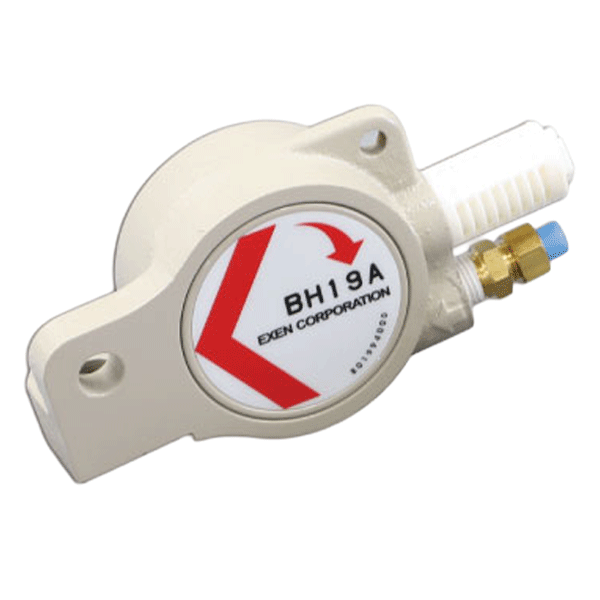
| Ball vibrator |  |
| Piston vibrator | |
| Vibration motor | |
Most Suitable  Suitable Moderately suitable
Arching
This phenomenon occurs when the compressive load from the material above causes an arch-shaped equilibrium zone to form within the hopper, preventing the stored material from being discharged through the outlet.

Materials Prone to Arching and Countermeasures
Arching is more likely to occur when handling high-moisture materials, cohesive powders and granular materials (including soybeans, fish meal, foundry sand, crushed sand, and clay), as well as ores and crushed aggregates.
Equipment Suitable for Eliminating Arching
Recommended solutions vary depending on hopper sizes.
- Small hoppers (up to 1 m diameter): Ball Vibrators, Vibrator Motors, and Knockers
- Medium-sized hoppers (1 to 3 m diameter): Vibrator Motors, Knockers, and Blasters
- Large hoppers (over 3 m diameter): EVSI 15 Series Vibrator Motors and Blasters
For arching caused by long fibrous materials or porous bulk solids, such as sawdust and rice bran, large-capacity Blasters are especially effective.
| Direct blaster | |
|---|---|
| Air knocker | |
| Ball vibrator | |
| Piston vibrator | |
| Vibration motor | |
Most Suitable Suitable Moderately suitableRatholing
Ratholing is a flow pattern in which only the material directly above the outlet flows through a narrow channel, while the surrounding bulk material, particularly near the vessel walls, remains stationary from the bottom to the top of the hopper. As a result, newly charged material is discharged first, while older material remains in the vessel as dead stock.

Materials Prone to Ratholing and Countermeasures
Ratholing is likely to occur when the hopper cone angle is greater than the angle of repose of the bulk material. It is particularly common when handling high-moisture materials, cohesive powders and granular materials, as well as low-density fine powders with relatively high bulk volume, such as carbon black, PVC, calcium carbonate, and talc. It can also occur when crushed sand, including materials containing lime dust, is stored in flat-bottom silos such as corrugated silos.
Equipment Suitable for Eliminating Ratholing
Blasters are generally recommended as the most effective solution to ratholing. In small hoppers, vibrator motors and knockers may also be effective in promoting material flow and reducing stagnation.
| Direct blaster | |
|---|---|
| Air knocker | |
| Ball vibrator | |
| Piston vibrator | |
| Vibration motor | |
Most Suitable Suitable Moderately suitableWall Build-up
Wall build-up occurs when cohesive powders, granular materials or coarse particles adhere to the hopper walls as a result of moisture, temperature changes or other environmental influences, causing material to accumulate and cling to the wall.

Materials Prone to Wall Adhesion and Countermeasures
Wall build-up commonly occurs when cohesive materials or highly hygroscopic powders and granular materials, such as lime, foundry sand, clay, and pulverized coal are stored in a hopper.
Equipment Suitable for Eliminating Wall Adhesion
Knockers are generally the most effective solution for removing material adhered to hopper walls. As a preventive measure, combining a Blaster with a Knocker is highly effective in reducing wall build-up before significant material adhesion occurs.
| Direct blaster | |
|---|---|
| Air knocker | |
| Ball vibrator | |
| Piston vibrator | |
| Vibration motor | |
Most Suitable Suitable Moderately suitable