Vibration Motor Applications and Installation Guide
Vibration Motor Applications
The powerful centrifugal vibration generated by low-frequency vibration motors is used not only to promote the flow of powders and granular materials, but also in a wide variety of industrial applications.
- Conveying and Feeding:Used as the vibration source for various vibratory feeders.
- Filling and Discharge:Utilized for efficiently filling and compacting powders and solid materials into molds, bags, cans, and other containers.
- Screening and Classification:Installed on vibratory screens to achieve accurate screening and separation through vibration.
Exen also manufactures custom-built vibratory feeders, vibratory screens, and table vibrators to meet specific application requirements.
Installation Methods for Various Equipment
Equipment fitted with vibration motors must have sufficient structural strength to prevent resonance. In addition, appropriate vibration isolation devices, such as vibration-damping rubber mounts, should be installed to prevent vibration from being transmitted to surrounding structures.
When vibration motors are installed on hoppers or other equipment not originally designed for forced vibration, reinforcement using welded angle steel is generally recommended. The vibration motor is then mounted to the reinforced framework.
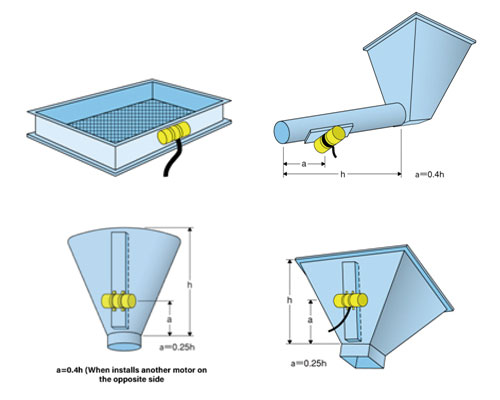
Installation on a Hopper with an Inclined Bottom
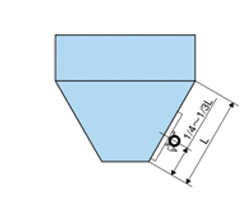
| Item | Installation Details |
|---|---|
| Mounting Position | Install at a point located one-quarter of the overall hopper length from the hopper outlet. |
| Installation Method | Secure the vibration motor directly to a steel vibration plate using bolts. |
| Number of Units | One unit is generally sufficient. For difficult-to-handle materials, select a vibration motor with a higher output. |
| Mounting Structure | Install a steel vibration plate inside the hopper for mounting the vibration motor. A flat steel plate is recommended. Support the plate on the hopper's horizontal ribs and secure it completely with continuous welding. |
Installation on a Concrete Hopper
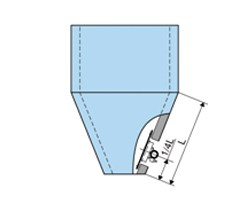
| Item | Installation Details |
|---|---|
| Mounting Position | Bolt the vibration motor to a location approximately one-quarter to one-third of the total hopper length measured from the outlet. |
| Number of Units | One unit is generally sufficient. For difficult-to-handle materials, the installation of two or more units may be considered. |
| Vibration Motor Selection | Since the upper section of the hopper is subjected to a greater load, a larger vibration motor is required. |
| Reinforcement Method (Angle Steel) | Reinforce the inclined surfaces by welding angle steel sections as extensively as possible. |
Installation on Special Hopper
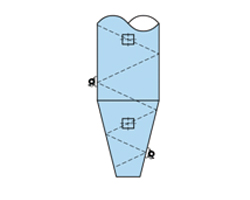
| Item | Installation Details |
|---|---|
| Hopper Configuration | For exceptionally long hoppers, arrange the vibration motors in a spiral pattern. |
| Installation Method | Arrange the vibration motors at equal intervals along the length of the hopper and bolt them securely at the locations specified in the drawing. |
Angle Steel Welding Method
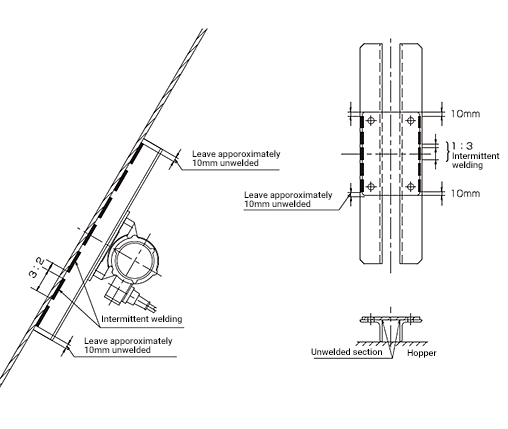
When installing a vibration motor on a hopper that has not been designed for vibration service, angle steel reinforcement should be welded to the hopper surface to ensure effective transmission of vibration over a wide area.
| Item | Installation Details |
|---|---|
| Welding Method | Intermittent welding |
| Welding Pitch | As a guideline, maintain a weld-to-unwelded length ratio of approximately 3:2. |
| Mounting Surface Level | Ensure that the mounting surface is properly leveled and flat before installing the vibration motor. |
Installation Precautions
- Ends of Angle Steel Welds:Do not weld the ends of the angle steel sections in order to reduce the risk of cracking.
- Length of Angle Steel:Longer angle steel sections help reduce stress concentration on the hopper and improve vibration transmission.
- Horizontal Ribs:If the hopper has horizontal ribs, weld the angle steel directly to the ribs.
- Motor Fastening:Secure the motor using high-tensile bolts, flat washers, spring washers, and double nuts.
- Welding Electrodes:Use welding electrodes with high tensile strength.
Note:
These installation methods are provided as general recommendations and do not guarantee performance or safety. The actual design and installation should be carried out with consideration of the operating conditions and the structure of the equipment to ensure safe operation.