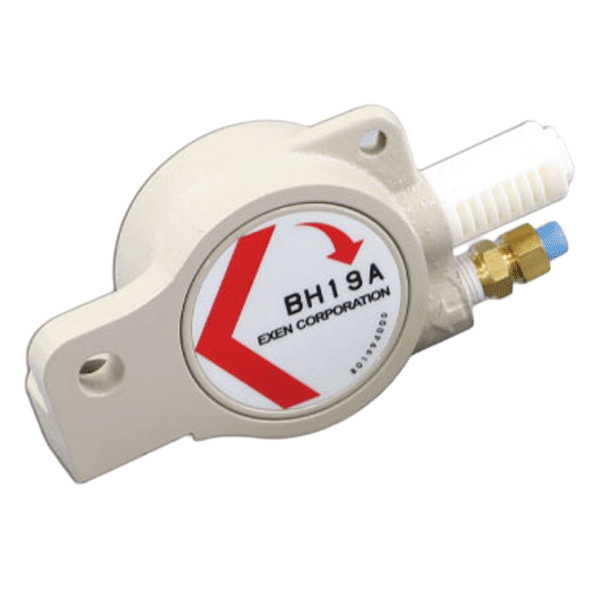
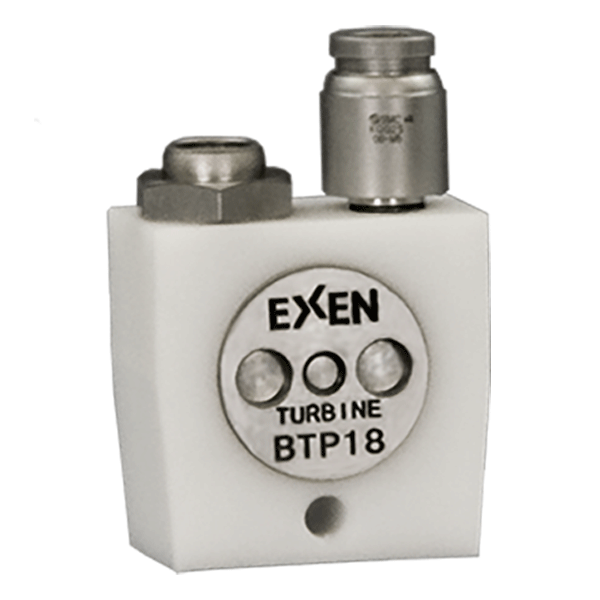
Air Vibrator Plastic Ball Vibrator
Product Overview
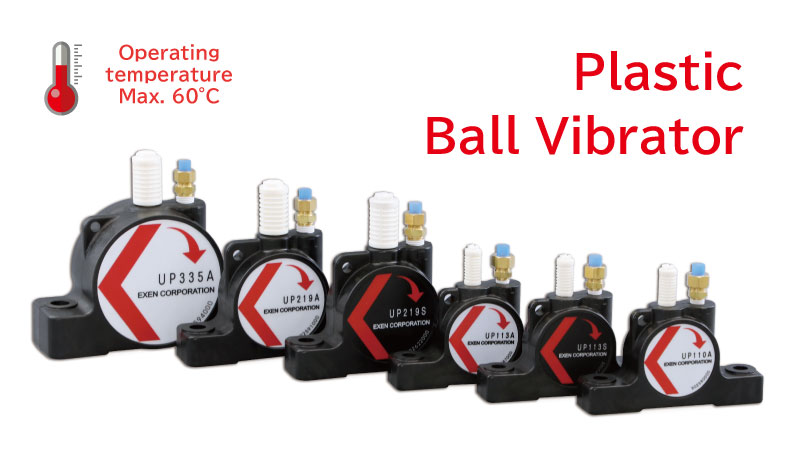
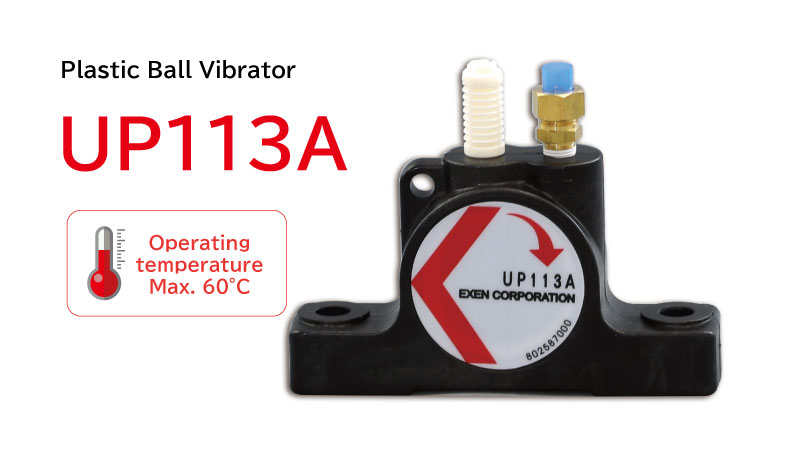
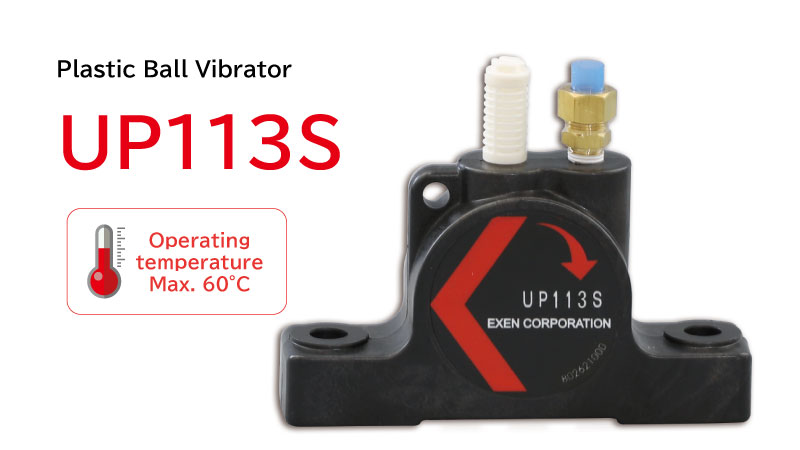
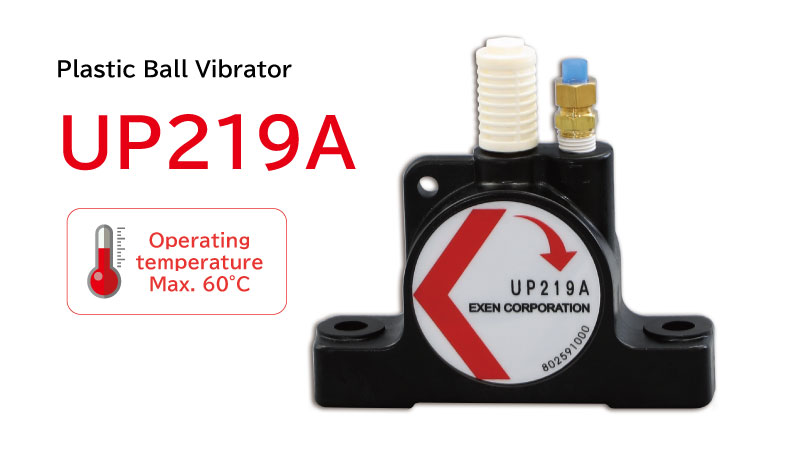
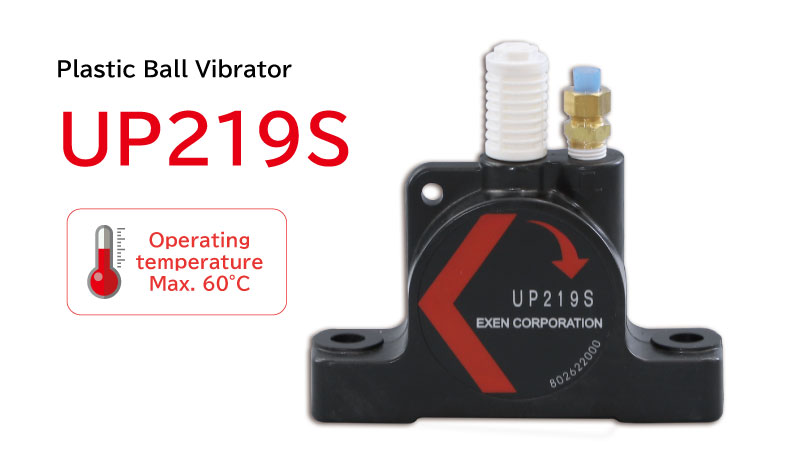
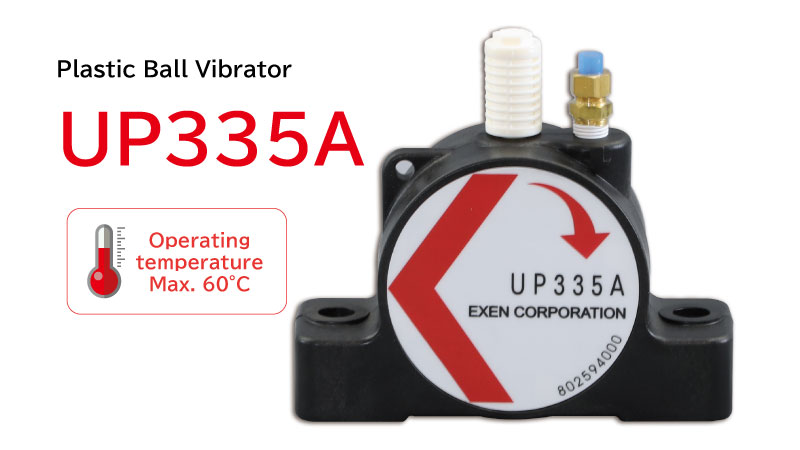
The Plastic Ball Vibrator effectively eliminates powder and granular material blockages inside containers by transmitting vibration from the outside of the vessel.
Its reinforced plastic body provides excellent corrosion resistance.
Thanks to its simple operating principle and design, the vibration frequency and centrifugal force can be easily adjusted by regulating the air pressure, which provides an effective solution for preventing clogging in hoppers, chutes, and similar equipment.
(Lubricant supplied via an oiler is required during operation.)
Key Features
Easy Adjustment of Vibration Frequency and Centrifugal Force
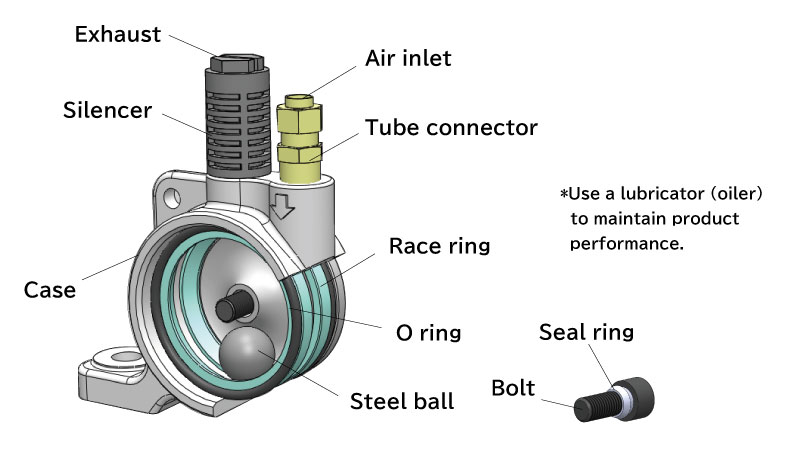
A steel ball rotating at high speeds within the grooved housing under the force of compressed air, produces powerful centrifugal vibration.
With its simple design, the vibration frequency and centrifugal force can be adjusted simply by regulating the air pressure.
* To maintain optimum performance, use a lubricator (oiler) during operation.
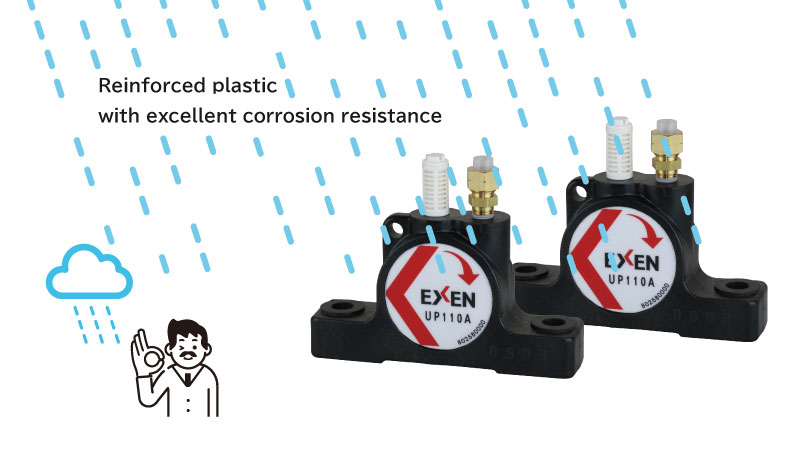
Reinforced Plastic Construction for Excellent Corrosion Resistance
The reinforced plastic housing provides excellent corrosion resistance, making the unit ideal for use in humid environments and areas prone to causing rust.
Lightweight and Compact Design
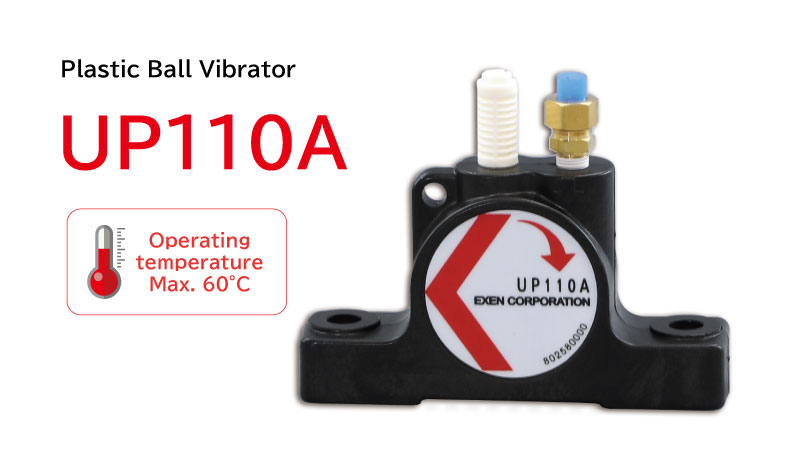
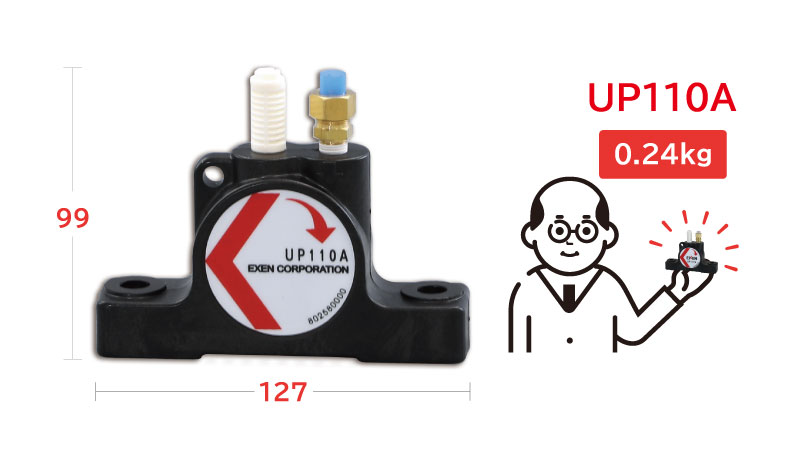
UP110A, the most compact model in the reinforced plastic series, offers an economic design with a mounting width of only 31 mm and a weight of just 0.24 kg. Its condensed size allows installation in small hoppers and confined spaces where conventional vibrators cannot be mounted.
Easy Maintenance
The steel balls can be replaced on all models by simply loosening the side cover bolts and removing the side cover.
Note: Ball replacement alone may not be sufficient if the internal race ring has experienced excessive wear.

Expanding Applications Through Innovation
While ball vibrators are widely used to prevent material build-up and clogging in hoppers and chutes, their potential applications are not limited to material handling.
They can also serve as drive units for vibrating tables used in filling and packaging operations.
With just a little ingenuity—such as applying vibration to unblock bottlenecks in parts supply production lines—these ball vibrators can be used in a wide range of applications.

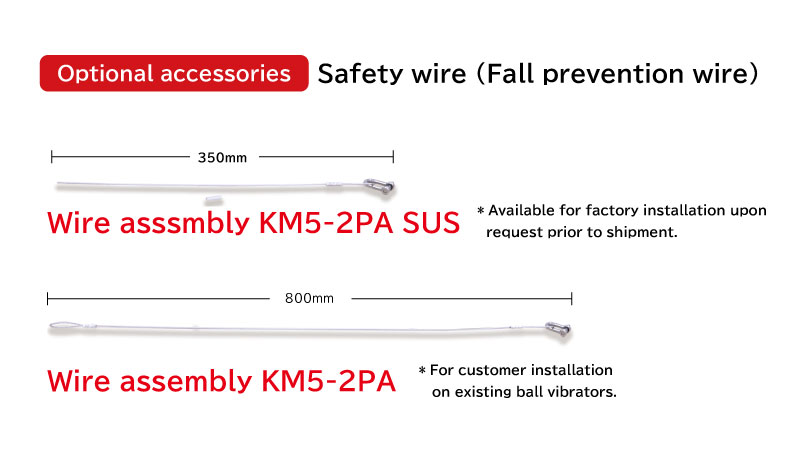
Standard Fall-Protection Wire Attachment Hole
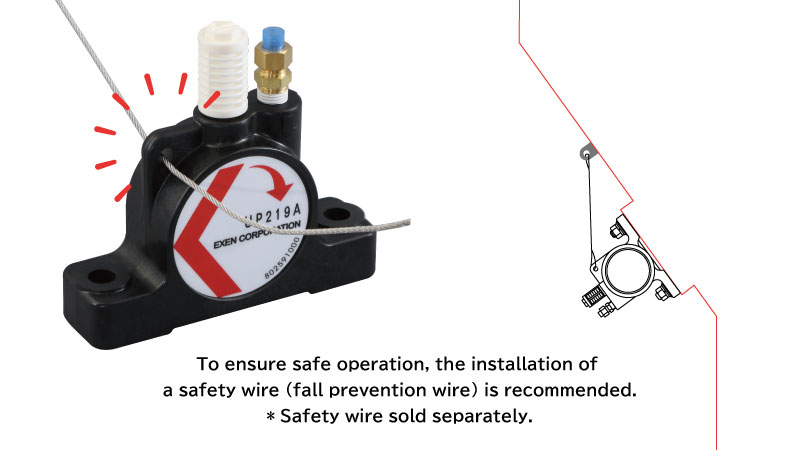
All ball vibrator models come standard with a fall-protection wire attachment hole.
For enhanced safety, we strongly recommend installing a safety wire to help prevent accidental drops.
(Safety wires are sold separately.)
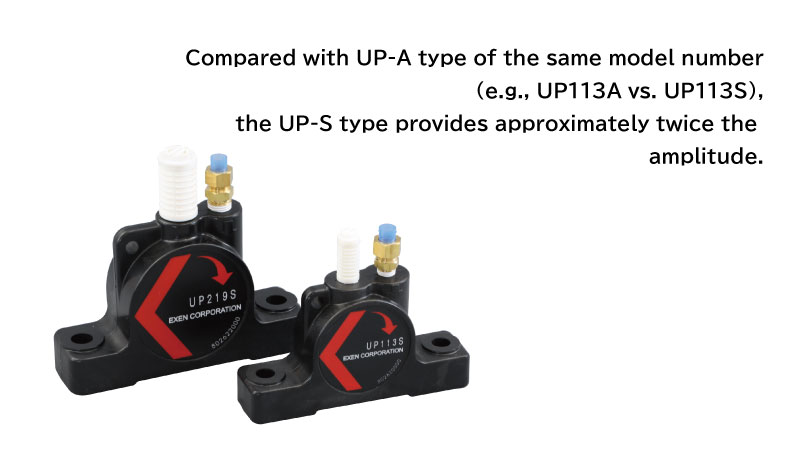
Compact Yet Powerful: UP-S Series
The UP-S Series is a high-performance model designed to deliver large-amplitude powerful vibration.
Compared with the corresponding UP-A model (e.g., UP113S vs. UP113A), the vibration amplitude is approximately twice as great, generating vibration force comparable to that of a model one size larger.
This makes the UP-S Series ideal for applications requiring powerful vibration in confined spaces, such as situations where additional vibration force is needed or a more compact vibration system is desired.
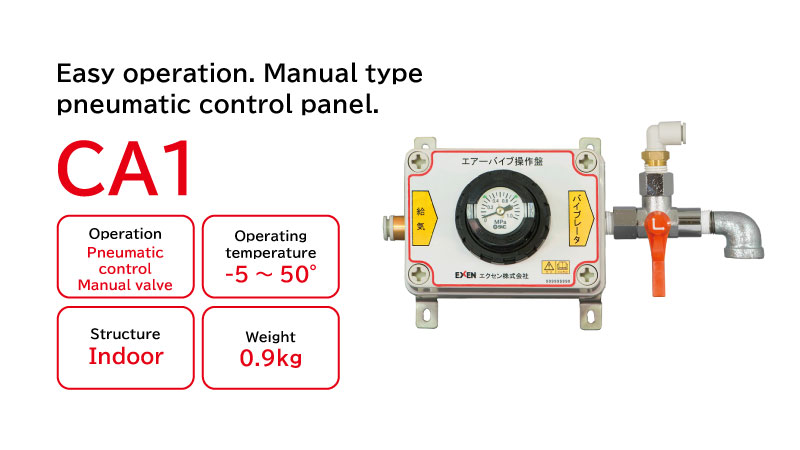
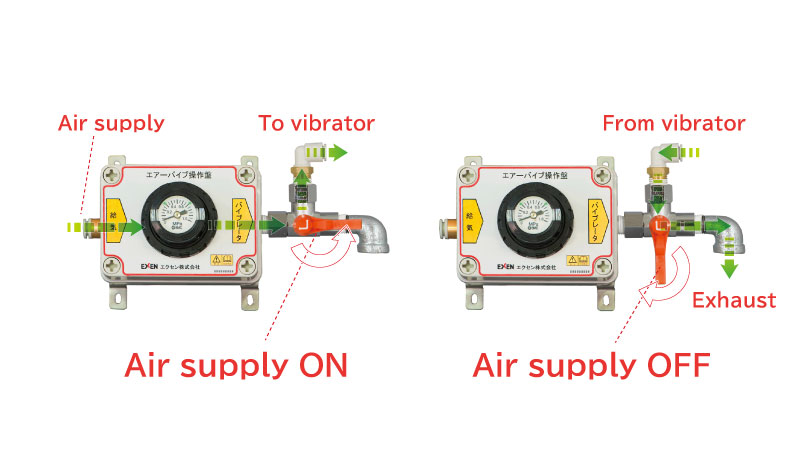
Manual Control Panel
The CA1 is an easy-to-operate manual control panel for pneumatic vibrators.
With only a vibrator air tube connection and a compressed air supply, it’s ready to operate.
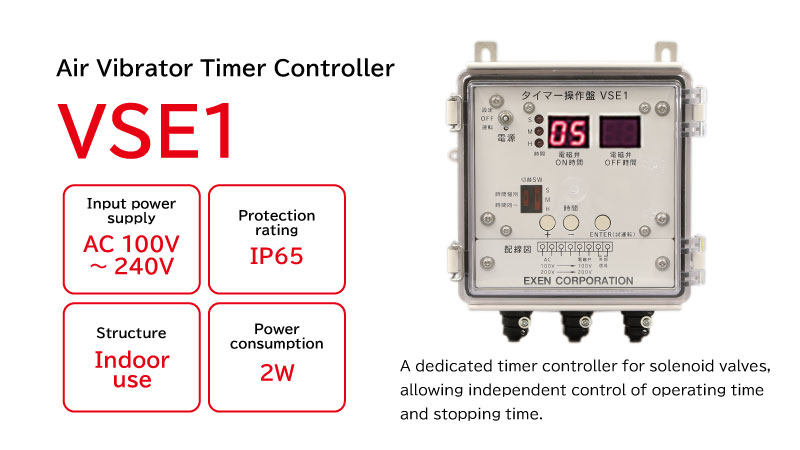
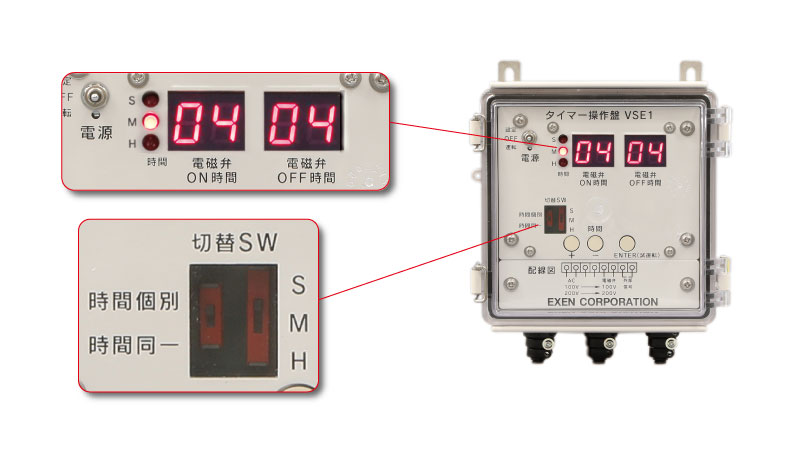
Timer Control Panel for Solenoid Valves
The VSE1 timer control panel supports input voltages of AC 100 V and AC 200 V.
Designed specifically for solenoid valves, the panel allows you to control both the run and stop times.
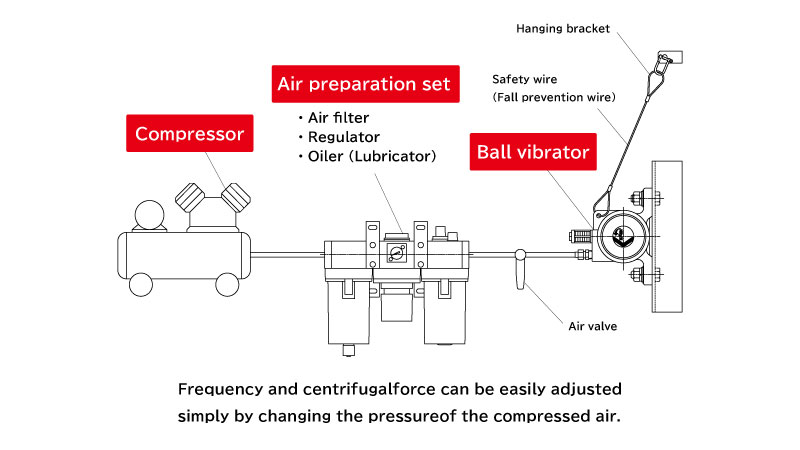
Adjustable Vibration Force Through Air Pressure Control
You can easily adjust the vibration frequency and centrifugal force simply by adjusting the compressed air pressure.
Optimal vibration settings can be achieved directly on-site by increasing the air pressure when greater vibration is needed or reducing it when vibration levels are too high
Specifications
Plastic Ball Vibrator
Metric
| Model | Required to Start (MPa) | Frequency (Hz) / Centrifugal Force (kN) / Air Consumption (m³/min (ANR)) | Weight (kg) | |||||||||||||||
|---|---|---|---|---|---|---|---|---|---|---|---|---|---|---|---|---|---|---|
| Vert. | Horz. | 0.2 MPa | 0.3 MPa | 0.4 MPa | 0.5 MPa | 0.6 MPa | ||||||||||||
| Hz | kN | m³/min (ANR) | Hz | kN | m³/min (ANR) | Hz | kN | m³/min (ANR) | Hz | kN | m³/min (ANR) | Hz | kN | m³/min (ANR) | ||||
| UP110A | 0.03 | 0.03 | 273 | 0.15 | 0.12 | 323 | 0.21 | 0.16 | 361 | 0.27 | 0.21 | 391 | 0.31 | 0.26 | 418 | 0.36 | 0.30 | 0.24 |
| UP113A | 238 | 0.24 | 0.12 | 282 | 0.34 | 0.16 | 316 | 0.43 | 0.21 | 344 | 0.50 | 0.25 | 367 | 0.57 | 0.31 | 0.25 | ||
| UP219A | 0.07 | 0.04 | 139 | 0.38 | 0.14 | 163 | 0.53 | 0.19 | 185 | 0.67 | 0.24 | 201 | 0.79 | 0.29 | 213 | 0.90 | 0.35 | 0.45 |
| UP335A | 0.23 | 0.03 | 101 | 0.94 | 0.19 | 119 | 1.31 | 0.26 | 135 | 1.69 | 0.33 | 147 | 1.99 | 0.41 | 157 | 2.27 | 0.48 | 1.10 |
| UP113S | 0.06 | 0.04 | 185 | 0.28 | 0.12 | 220 | 0.40 | 0.16 | 247 | 0.50 | 0.21 | 266 | 0.58 | 0.26 | 281 | 0.65 | 0.30 | 0.25 |
| UP219S | 0.11 | 109 | 0.46 | 0.14 | 133 | 0.68 | 0.19 | 151 | 0.87 | 0.24 | 165 | 1.03 | 0.29 | 174 | 1.16 | 0.35 | 0.48 | |
Imperial
| Model | Required to Start (PSI) | Frequency (VPM) / Centrifugal Force (lbf) / Air Consumption (CFM) | Weight (lb) | |||||||||||||||
|---|---|---|---|---|---|---|---|---|---|---|---|---|---|---|---|---|---|---|
| Vert. | Horz. | 29 PSI | 44 PSI | 58 PSI | 73 PSI | 87 PSI | ||||||||||||
| VPM | lbf | CFM | VPM | lbf | CFM | VPM | lbf | CFM | VPM | lbf | CFM | VPM | lbf | CFM | ||||
| UP110A | 4.35 | 4.35 | 16,380 | 44.96 | 4.24 | 19,380 | 44.96 | 5.65 | 21,660 | 67.44 | 7.41 | 23,460 | 69.69 | 9.18 | 25,080 | 89.92 | 10.59 | 0.50 |
| UP113A | 14,280 | 44.96 | 4.59 | 16,920 | 67.44 | 5.65 | 18,960 | 89.92 | 8.83 | 20,640 | 112.41 | 8.83 | 22,020 | 134.89 | 10.95 | 0.60 | ||
| UP219A | 10.15 | 5.80 | 8,340 | 89.92 | 4.94 | 9,780 | 112.41 | 6.71 | 11,100 | 157.37 | 8.47 | 12,060 | 177.60 | 10.24 | 12,780 | 202.33 | 12.36 | 1.00 |
| UP335A | 33.36 | 4.35 | 6,060 | 202.33 | 6.71 | 7,140 | 292.25 | 9.18 | 8,100 | 382.18 | 11.65 | 8,820 | 447.37 | 14.48 | 9,420 | 516.06 | 16.95 | 2.40 |
| UP113S | 8.70 | 5.80 | 11,100 | 67.44 | 4.24 | 13,200 | 89.92 | 5.65 | 14,820 | 112.41 | 7.41 | 15,960 | 157.37 | 9.18 | 16,860 | 157.37 | 10.59 | 0.60 |
| UP219S | 15.95 | 6,540 | 112.41 | 4.94 | 7,980 | 157.37 | 6.71 | 9,060 | 202.33 | 8.47 | 9,900 | 231.55 | 10.24 | 10,440 | 269.77 | 12.36 | 1.10 | |
* Operating ambient temperature: 60°C (140°F) or lower.
* Specifications above are based on our measurement conditions. They may vary depending on installation conditions.
* The starting pressure is measured when pressure is gradually increased at a point 3 m (9.8 ft) upstream of the vibrator until operation begins, and may be higher than the operating pressure.
* "Vertical" refers to the mounting orientation in which the ball rotates in vertical plane, while "Horizontal" refers to the mounting orientation in which the ball rotates horizontal plane. For installation angles other than vertical, the starting pressure tends to be lower than that for the vertical orientation.