About Vibrator Processing Capacity
Concrete vibrators have a practical processing capacity that should be taken into consideration during concrete placement operations.
For example, the HIB150H hydraulic vibrator used in dam construction is the largest internal vibrator manufactured in Japan, featuring a 150 mm vibrator head diameter. Even so, a single unit can process a maximum of approximately 25 m³ of concrete per hour when compacting concrete with a 3 cm slump and a maximum aggregate size of 150 mm.
Similarly, at the discharge end of a concrete pump capable of pumping 30 m³ per hour, even when placing building concrete with a slump of approximately 18 cm, at least two 40 mm vibrators should be available. Otherwise, compaction may not keep pace with the rate of concrete placement, resulting in insufficient consolidation.
While reducing construction costs is important, sufficient placement personnel and an adequate number of vibrators should always be provided.
A failure during concrete placement can undermine all the effort invested in the design, foundations, and every other stage of the project.
Basic Operating Procedures and Precautions
Poker-type vibrators should be inserted at intervals corresponding to their effective operating range. Consolidation is complete when the reduction in concrete volume ceases, cement paste has risen uniformly to the surface, and the surface exhibits a glossy appearance.
When withdrawing the vibrator, pull it out slowly to prevent voids or channels from being left in the concrete.
In addition to these basic procedures, pay particular attention to the following points:
- Construction joints tend to become weak points in a structure. Therefore, the structure should be cast as a monolithic unit whenever possible. Each predetermined placement section must be concreted continuously until completion.
- Ensure that an adequate number of vibrators are available and in proper working condition.
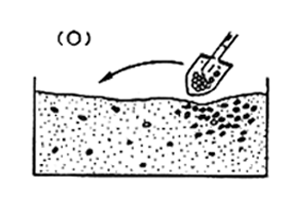
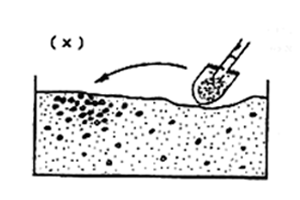
- If coarse aggregate segregation occurs during placement or after concrete discharge, collect the segregated coarse aggregate and redistribute it into areas containing excess mortar. Then thoroughly reconsolidate the concrete using a vibrator.
Revibration and Two-Layer Placement
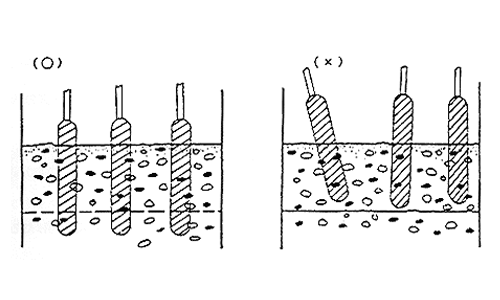
When placing and consolidating an upper layer of concrete, if the lower layer has begun to set slightly, excellent results can be achieved by inserting the vibrator approximately 10 cm into the lower layer and applying revibration at close intervals.
If an appropriate retarding admixture has been added to the lower layer beforehand, the period during which revibration remains effective can be extended, helping to prevent cold joints.
This technique is known as two-layer placement.
Note: Cold Joint
A cold joint is a surface discontinuity that occurs between previously placed and newly placed concrete when concrete placement is delayed during continuous pours or when rapid-setting concrete is used.
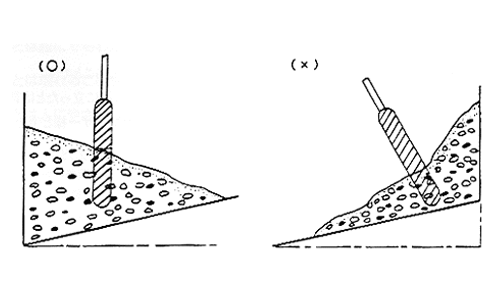
Precautions for Concrete Placement on Slopes
When placing concrete on slopes or embankments, concrete should always be placed from the lower portion upward, and vibration should likewise begin at the bottom.
This procedure allows the weight and vibration of subsequently placed concrete to improve consolidation.
Conversely, if placement begins at the top of the slope, the upper concrete may tend to pull the lower concrete downward. In particular, vibration applied to the lower section can cause the concrete to flow, reducing support for the concrete above.