Engineering and Analysis Behind Our Vibration Technology
Engineering and Analysis Framework
Vibration engineering is rooted in classical theory, yet remains at the forefront of modern engineering.
Its applications are wide-ranging, and virtually all industrial machinery is subject to vibration, whether at high or low frequencies. Vibration systems consist of both the vibration source (such as vibrators and drive systems) and the objects being vibrated (such as formwork, concrete, and machine structures), and their behavior is extremely complex.
Understanding the underlying mechanisms and managing the design, manufacturing, and maintenance of such systems require extensive knowledge, experience, and expertise.
For more than a century, EXEN has accumulated extensive experience and expertise by providing vibration technology and equipment for civil engineering and construction applications.
During this time, with the remarkable advancements in computer technology, Exen successfully developed computer-aided applications of vibration engineering. Company-wide policies built an integrated engineering system that combines 3D CAD for intuitive visualization, CAE for advanced simulation/visualization of vibration behavior, and experimental testing for validation through actual vibration measurements.
Recognizing that the key to success in the 21st century lies in combining advanced technology with decades of accumulated experience, we have implemented and actively utilize both 3D CAD and CAE systems.
As a manufacturer, we pledge to help our customers meet their challenges by delivering high performance machinery and products of exceptional value. We are committed to providing ongoing, reliable product development and high-quality technical support.
Ultimately, success in the manufacturing industry is achieved through well-designed machinery built on sound engineering principles.
With this philosophy in mind, our Engineering and Quality Assurance Departments have established the following six core concepts.
- Good design is easy to manufacture.
- Good design minimizes the number of parts.
- Good design is easy to analyze and calculate.
- Good design is clear and easy to understand.
- Good design anticipates potential failures.
- Good design is user-friendly.
Furthermore, as part of our corporate strategy, we are leveraging 3D CAD and CAE technologies to build a company-wide concurrent engineering framework.
This approach enables shorter lead times from the design phase to prototyping and mass production, while also improving quality, reducing costs, and strengthening our sales and marketing capabilities.
Guided by this philosophy in conjunction with advancing technologies, we manufacture our products with commitment and pride. We look forward to continuing to earn your trust through reliable products and engineering excellence.
Concurrent engineering
Concurrent engineering is a collaborative problem-solving methodology that integrates the knowledge, experience, and ideas of many people within a short period of time to solve a particular challenge.
To ensure that concepts and designs can be understood by everyone involved, the ability to visualize products and systems in three dimensions plays a critical role.
- Building customer trust and long-term relationships
- Strengthening and integrating our corporate capabilities
- Creating high-value-added products
- Simplifying manufacturing processes and inventory management
- Streamlining maintenance and inspection systems
- Centralizing technical know-how for efficient decision-making
- Driving continuous cost reduction
Analysis Case Studies
Feeder Modal Analysis (Case Study 1)
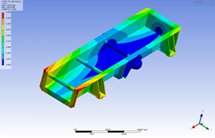
Feeder Modal Analysis (Case Study 2)
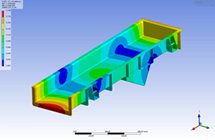
Screen Modal Analysis (Case Study 1)
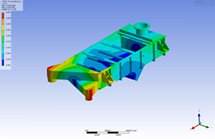
Screen Modal Analysis (Case Study 2)
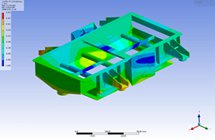
Rail Load Testing Device Stress Analysis
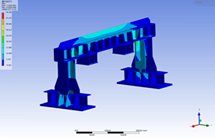
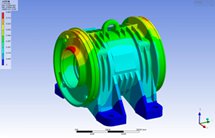
Motor Case Stress Analysis